Women Rising: Fearless and Focused

This year marked the fifteenth anniversary of HIA-LI’s Women’s Leadership Conference, a tradition that began after a roundtable convened by U.S. Senator Kirsten Gillibrand at Anne Shybunko-Moore’s company, GSE Dynamics. At that first meeting, we talked candidly about pay equity, childcare, work–life blending, and the headwinds women often face.

Senator Gillibrand encouraged us to keep the conversation going — and for fifteen years we have done exactly that, thanks to the leadership of our Women’s Collaborative, chaired by Carol A. Allen, President and CEO of People’s Alliance Federal Credit Union and HIA-LI Board Member, who has helped guide this event’s evolution.

This year, before introducing our keynote, I shared a moment early in my own career. When my boss at Dale Carnegie Training announced his retirement and asked me to step into the managing director role, I immediately began listing the reasons I wasn’t ready. He cut me off. He wanted to talk about why I was ready. I went home, barely slept, and finally allowed myself to imagine what could happen if I said yes. I did — and that decision changed the trajectory of my career.

As I told the audience, we gathered not just to talk about being fearless, but about what it means to do things afraid. Because, truly, “we were built to never stay in the shallow end.”

A Keynote on Authenticity and Possibility

Our keynote speaker, Clare Cusack, President and CEO of the New York Bankers Association, reminded us what becomes possible when leaders show up as their full, honest selves. A lifelong Long Islander and the first woman to hold her position in the association’s 131-year history, Clare spoke about her unconventional path and the power of embracing it.

One of the most moving moments came when she shared the story of a dancer who lost her leg in the Boston Marathon bombing and later trained to run the marathon on a prosthetic limb. On the night before the race, the dancer found a quote that carried her forward:

“No one is cheering louder for me than the woman I used to be. If that girl could see me now, never forget how wildly capable you are.”

Clare added, “Never forget how wildly capable you can be. Cheer for the future woman, too.”

Fear, Focus, and the Courage to Lead

Our panel, moderated by attorney Domenique Camacho Moran, a partner at Farrell Fritz, turned that message into practice. Each leader shared a moment when fear met purpose — and purpose won.

Teresa Ferraro, President and CEO of East/West Industries, reflected on leading a company whose mission is ensuring the safety of military aircrew. She spoke about listening as a core leadership skill, noting, “Two ears and one mouth — make sure you listen. It helps you stay focused and aware.”

Davi Tserpelis, Senior Vice President and Regional Business Banking Manager at City National Bank, described her defining quality in one word: tenacity. She shared how a difficult comment from a colleague once brought her to tears, until she later realized it was actually a recognition of her persistence. Then came a far greater trial: a breast cancer diagnosis shortly after starting a new role. She continued working throughout treatment, telling her children every day she would be okay. “I became — and stayed — very positive,” she said. “Now I get to inspire other women to be strong.”

Skye Ostreicher, founder of In the Room Media, talked about her unexpected shift from chemistry major to studying what she calls “human chemistry” — the reactions between leaders, organizations, and communities. She described losing a job during the pandemic, only to later build a platform that uplifts stories and voices that might otherwise go unheard.

Katherine Fritz, President and CEO of Long Island Cares, grounded the conversation in purpose shaped by experience. Growing up, her family sometimes relied on subsistence skills to stay fed — a perspective that drives her mission today. She also shared the bravest thing she has ever done: after losing her left foot in an accident, she spent years relearning to walk, then traveled alone to Europe to complete more than 200 miles of the Portuguese Coastal Camino.

Dawn Cagliano, President of IVCi, highlighted the responsibility leaders have to grow the people around them. Skills matter, she said, but emotional intelligence is what creates trust and followership. True leadership is measured not by individual achievements, but by how well others thrive because of you.

Throughout the discussion, Domenique emphasized the power of women speaking honestly — about ambition, uncertainty, and the moments that require courage. When women at different stages of their careers gather for open conversation, she said, clarity and confidence begin to rise.

Breakouts: Turning Insight into Action

This year’s conference also featured six breakout sessions designed to turn inspiration into practical strategy:

  • The Success Equation: Multiply Your Potential Exponentially
  • Level Up: Women Leading with Purpose
  • Lead the Transformation — Navigating AI with Confidence
  • Own Your Own Story: 20 Real Lessons for the Real World
  • Built to Connect: The Undeniable Power of Women Who Choose to Collaborate
  • The Triple Decker Sandwich Generation: Not Your Mother’s Estate Plan — Redefining Wealth, Caregiving, and Legacy for Today’s Woman

These conversations bridged leadership development, technology, storytelling, collaboration, and multigenerational caregiving — showing that women’s leadership is not one-dimensional. It is dynamic, evolving, and deeply interconnected.

The Message: Fearless Begins with Honest

If there was one thread binding the keynote, panel, and breakout rooms, it was this: women become fearless and focused not by eliminating fear, but by telling the truth about it — and choosing to move anyway. Leadership becomes possible when authenticity meets community, when lived experience becomes an asset, and when we cheer not only for the women we are, but the women we are still becoming.

The stories shared this year — about resilience, reinvention, caregiving, healing, entrepreneurship, and bold career choices — are proof that Long Island’s future is in capable hands. Our job now is to keep creating the spaces where women rise, support one another, and continue stepping out of the shallow end.

Building Long Island’s Talent Pipeline — Together

Last week, we took an extraordinary step forward for Long Island’s future.

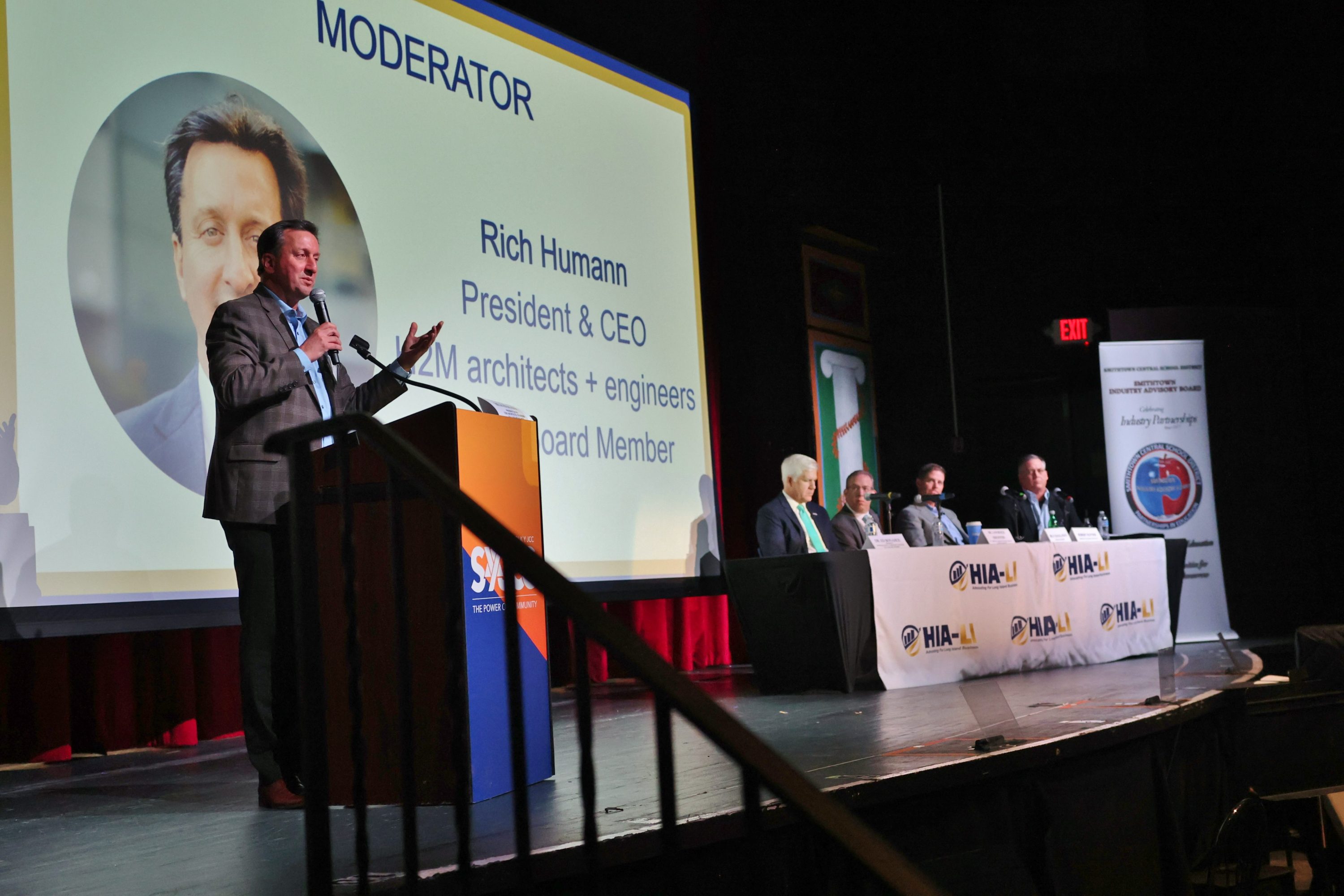
Our first-ever HIA-LI Workforce Summit — held in partnership with the Smithtown Central School District and the Smithtown Industry Advisory Board — brought together more than 300 educators, guidance counselors, and business leaders at the Suffolk Y Jewish Community Center in Commack. It was a packed house, and more importantly, it was a packed conversation.

From the moment attendees walked through the door, there was an unmistakable sense of optimism and purpose. Teachers stood alongside business executives. College presidents spoke with construction and manufacturing leaders. Guidance counselors shared ideas with healthcare professionals. Everyone came with a shared mission: to bridge the gap between education and employment so our young people can build rewarding careers right here on Long Island.

The Start of a New Dialogue

For years, we’ve talked about the challenges of workforce development — the shortage of skilled workers, the exodus of young talent, and the perception that “success” only comes with a four-year degree. The summit showed that this conversation is changing.

What we heard — and felt — was a powerful message of alignment. Business and education both understand that the world of work has evolved, and our approach to preparing students must evolve with it. A college degree remains one valuable path, but so are two-year programs, certificate credentials, apprenticeships, and technical careers that lead to meaningful, well-paid jobs with growth potential.

Several speakers underscored how important it is to remove the stigma that sometimes surrounds the trades and vocational programs. In reality, those routes can open doors to prosperity — often with less debt and more hands-on experience.

Collaboration in Action

What made this summit so inspiring was seeing collaboration happen in real time.

  • State Senator Mario Mattera opened with a passionate call to unite business, labor, and education to build the workforce of tomorrow.
  • Rich Humann of H2M architects + engineers and Dr. Ed Bonahue of Suffolk County Community College — both HIA-LI Board Members and Co-Chairs of our Workforce Development Task Force — shared how we can better align education with industry demand.
  • Our keynote speakers, Michael Woods and Janine Lalia from the CTE Technical Assistance Center of New York, reminded us that true career readiness begins in our classrooms — where teachers and counselors help students see all the pathways to success.
  • Industry leaders like Billy Haugland II, Robert Kufner, and Dr. Lawrence Eisenstein showed that construction, manufacturing, and healthcare all have incredible stories to tell — stories that can inspire young people to build their futures right here at home.
  • And Phil Como from the Smithtown Industry Advisory Board brought it all together, emphasizing how partnerships like these directly benefit students — connecting education to opportunity.

The Momentum Ahead

The summit reinforced something I’ve long believed: when we put educators and employers in the same room, great things happen. Conversations turn into partnerships. Ideas turn into programs. And most importantly, young people begin to see new possibilities for their future.

Our HIA-LI Workforce Development Task Force will continue driving this momentum forward. We’ll keep facilitating these dialogues, supporting school-business partnerships, and expanding awareness of the incredible career opportunities that exist across Long Island’s innovation ecosystem.

The feedback from the summit has been overwhelmingly positive — from educators grateful for the insight, to business leaders eager to stay involved. But this is only the beginning.

We now have a foundation, a shared understanding, and a growing network of partners ready to take action. The challenge — and the opportunity — is to keep that conversation going.

Looking Forward

Long Island’s future depends on how well we prepare our next generation to thrive — not just in classrooms, but in careers that matter. The summit proved that we have both the passion and the partnerships to make that happen.

Together, we’re building a stronger, smarter, more connected Long Island — one that keeps our talent here, strengthens our economy, and ensures every student sees a future filled with promise.


Click here to download our workforce development report, Innovating the Talent Pipeline: Strategies for Workforce Development in the Long Island Innovation Park at Hauppauge. This 54-page report, developed by the Workforce Development Institute in collaboration with HIA-LI and the Suffolk County Industrial Development Agency, outlines the critical need for stronger industry-academia partnerships to prepare students for careers that are in-demand.

Four Standout Organizations Earn Top Honors at HIA-LI’s 2025 Business Achievement Awards

Long Island’s business community came together to celebrate innovation, leadership, and community impact at the 31st Annual HIA-LI Business Achievement Awards, held at the Crest Hollow Country Club in Woodbury. The gala luncheon—often called the Academy Awards of the Long Island business community—honored four standout organizations for their exceptional performance, workplace culture, and service to the region. The event took place on September 19, drawing hundreds of executives, entrepreneurs, and community leaders.

Recognizing Leadership and Innovation

In the Large Business category, Flexible IT, based in Hauppauge, was honored. As Long Island’s largest Managed Services Provider, Flexible IT supports companies of all sizes with technology planning, cybersecurity, and IT solutions that drive long-term success. Accepting the award on behalf of the company was David Wasserman, Chief Value Officer, who reflected on the firm’s broader purpose beyond technical support.

“Flexible IT isn’t about fixing computers — we’re an information factory,” Wasserman said. “Our real work lives in the intangibles: the insight, the innovation, and the knowledge that help our clients move forward. We’re proud to call the Long Island Innovation Park our home and to be part of Long Island’s story of progress.”

The Small Business award went to McBride Consulting & Business Development Group, based in Babylon. For nearly two decades, the firm has been advising organizations nationwide with expertise in business strategy, development, and government relations. Accepting the award, Robert McBride, President and CEO, spoke about his company’s mission and the dedication of his team.

“We don’t take on clients unless we can add real value,” McBride said. “Our team is driven to success, and we take pride in transforming challenges into solutions that strengthen our communities. This award is really about them — not me.”

The Not-for-Profit award was presented to People’s Arc of Suffolk, based in Bohemia. The organization provides vital services to individuals with intellectual and developmental disabilities, empowering them through programs, advocacy, and community partnerships. Representing the organization, Veronica, a self-advocate and program participant, spoke movingly about how People’s Arc has impacted her life.

“People’s Arc of Suffolk has made such a difference in my life,” Veronica said. “I’ve learned work skills, gained confidence, and found opportunities I never thought I’d have. The staff here truly care about seeing us succeed, and I’m proud to be part of this community.”

Finally, Whoggga, based in Hauppauge, earned the Rookie of the Year award. Founded less than five years ago, Whoggga has quickly built a reputation as an innovative platform that fosters authentic connections among entrepreneurs, helping business leaders grow both personally and professionally. Accepting the award, Adam Holtzer, Chief Executive Officer and Co-Founder, spoke about the power of community among business owners.

“Being a business owner can be lonely,” Holtzer said. “Whoggga is about changing that — building a trusted community where entrepreneurs connect personally and professionally. This award reflects the power of genuine relationships and support among Long Island’s business owners.”

Celebrating a Strong Business Community

This year’s finalists represented a cross-section of Long Island’s economy—from construction and consulting to tourism and human services. Their diversity underscores the strength of the region’s business ecosystem, as well as the role that innovation and resilience play in sustaining growth.

By honoring these organizations, HIA-LI not only recognized their achievements but also highlighted examples that others can follow to enhance performance and community impact.

Looking Ahead

As HIA-LI continues to advocate for Long Island’s economic vitality, the Business Achievement Awards remain a signature event, demonstrating how business success and community leadership are deeply interconnected. This year’s recipients set the bar high, showing that Long Island companies are more than capable of competing, thriving, and leading in today’s challenging marketplace.

Uniting for Progress: Business Groups Power Community Success

This week, Long Island Business News published an op-ed by Long Island Builders Institute CEO Mike Florio and me titled “When Business Groups Unite, Communities Win.” You can read the full piece here.

In the column, Mike and I reflect on an important lesson from this year’s Republican primaries in Huntington and Smithtown. At stake were two major initiatives: Huntington’s Melville Town Center Overlay District and Smithtown’s Kings Park revitalization. Both projects were designed to address some of our region’s most pressing challenges—creating affordable workforce housing, bringing vitality back to local downtowns, and supporting jobs in the construction trades.

For decades, there has been a perception that business interests and community interests are at odds. Too often, the debate is framed as “profits versus people.” But the reality is that responsible development and strong communities go hand-in-hand. The Melville and Kings Park projects represent the kind of forward-looking planning that benefits working Long Islanders and strengthens our economy.

Recognizing this, Long Island’s leading business organizations—including HIA-LI, the Long Island Builders Institute, the Long Island Association, the Association for a Better Long Island, the Long Island Contractors Association, and the Commercial Industrial Brokers Society of Long Island—came together to speak with one voice. By joining forces, our coalition clarified the stakes for voters and pushed back against misinformation.

The results spoke volumes. Voters supported candidates who stood for progress, workforce housing, and job creation. Huntington Supervisor Ed Smyth called the outcome a “victory of truth over lies.” Smithtown Supervisor Ed Wehrheim expressed pride in continuing to make his town “a wonderful place to raise a family.” These outcomes reinforce a simple but powerful truth: when business organizations unite, communities benefit.

The lesson extends far beyond these two towns. Long Island still faces significant challenges—housing shortages, aging infrastructure, and the need to retain young talent while supporting middle-class families. None of these issues can be addressed in silos. But when business groups align around shared priorities, our message carries further and our communities grow stronger.

At HIA-LI, we believe collaboration is not just a strategy but a responsibility. By working together, we can advocate for policies that create opportunity, foster innovation, and ensure Long Island remains a place where the next generation can build their future.

Read the full op-ed in Long Island Business News here.

A Day of Ideas, Innovation, and Impact at the HIA-LI 2025 Trade Show

At the Executive Luncheon podium is Jim Coughlan, Co-Founder and Principal, TRITEC Real Estate. Seated to his left is Tracey Edwards, Senior Vice President, Sands New York.

I had the privilege of welcoming nearly 4,000 business professionals to the Suffolk Credit Union Arena on May 29 for our 37th Annual HIA-LI Business Trade Show & Conference—and what a day it was.

From the moment doors opened, the energy was palpable. More than 375 exhibitors transformed the arena into a bustling marketplace of ideas and opportunities. Our industry pavilions—Technology, Finance, Innovation & Economic Development, Energy & Environmental, Healthcare, and Manufacturing—showcased Long Island’s strengths and the forward momentum of our regional economy.

The day began with an unforgettable Executive Breakfast headlined by Harris Beber, Global Head of Marketing for Google Workspace. Harris offered a dynamic and accessible presentation, “Demystifying AI: What It Is, What It Isn’t, and Why It Matters for Your Business.” He made it clear that AI is no longer a futuristic concept—it’s a practical tool, already reshaping productivity, marketing, and decision-making. One moment that stuck with me: Harris pointed out that “AI won’t take your job, but someone using AI might.” That one sentence sparked countless hallway conversations afterward—and that’s exactly the kind of thought leadership we aim to deliver through HIA-LI.

Later in the day, we hosted our Executive Luncheon titled “Economic Development – Reshaping Long Island’s Landscape.” We were honored to welcome Lieutenant Governor Antonio Delgado, who offered thoughtful and passionate opening remarks on the need for sustained, inclusive growth. He emphasized that “when we invest in people, we expand opportunity,” and spoke about the importance of aligning infrastructure investments with workforce development to ensure that all Long Islanders can thrive. Suffolk County Executive Ed Romaine followed with a passionate call to action, reminding us that Long Island can and should be the economic engine for all of New York State. “Show me how you invest your money and I’ll show you where your state or county is going,” he said, as he advocated for infrastructure funding, better public transportation, and policies that allow our region to retain and attract young families.

The luncheon panel was skillfully moderated by Marc Herbst, Executive Director of the Long Island Contractors’ Association, who reminded the audience that “Economic development isn’t just about buildings—it’s about planning for the people who will live and work in them. That’s what today’s conversation is all about.”

The panelists included:

Together, they painted an exciting picture of Long Island’s future—one filled with innovation, revitalization, and resilience.

Of course, our Trade Show is more than marquee speakers. This year, we introduced Trade Show Talks—fast-paced, 20-minute floor presentations covering everything from HR law to financial strategy. Alongside these were our traditional breakout sessions, diving deeper into leadership, marketing, and emerging technologies. And for those seeking quick networking wins, our speed networking sessions helped connect dozens of professionals in record time.

But perhaps the most rewarding part of the day was hearing what attendees and exhibitors had to say. As one first-time attendee, Chris Mundy of MILCON Construction, shared, “This was a great opportunity to meet other business owners and generate new leads.” Another, Siobhan Ainsworth of Long Island Igloos, wrote, “I was very impressed with the event as a whole. It was well organized and gave me the opportunity to make a lot of great connections.” And Richard Cassiano of North American Resource Capital, Inc. added, “There was a great variety of exhibitors to meet.”

These kinds of comments reflect the very heart of why we produce this event.

And the numbers tell the story too:
100 percent of sponsors rated the show 8 or better out of a scale of 10.
Nearly 80 percent of attendees gave us top marks.
This feedback, gathered directly from our post-event surveys, confirms that our trade show continues to meet or exceed the needs of Long Island’s business community.

I’m grateful to our sponsors, exhibitors, speakers, and the entire HIA-LI team who made the day possible. If you missed this year’s event, we hope to see you next year. And if you were there—we hope you left as inspired as we did.

Here’s to continued growth, stronger relationships, and a thriving Long Island.

Connecting, Learning, Growing: The Power of One Day at the HIA-LI Trade Show

Harris Beber, Global Head of Marketing for Google Workspace, will keynote the Executive Breakfast.

Every year, I get excited when May rolls around, because it means the return of the HIA-LI Annual Trade Show & Conference — and 2025 is shaping up to be one of our most dynamic and forward-looking events ever.

On Thursday, May 29, we will welcome some 4,000 business professionals and showcase more than 375 exhibitors at the Suffolk Credit Union Arena at Suffolk County Community College in Brentwood. This is the 37th year of the show, and our momentum just keeps growing. As always, our goal is simple: to create a space where ideas are exchanged, partnerships are formed, and Long Island business moves forward.

This year’s event, once again presented in partnership with our friends at Sands New York, is packed with opportunities for education, inspiration, and high-impact networking.

We’ll kick off the day with our Executive Breakfast at 8:00 a.m., featuring Harris Beber, the Global Head of Marketing for Google Workspace. Harris, who was previously CMO of Vimeo and has been recognized by Forbes as one of the top marketing executives in the country, will speak on the topic: “Demystifying AI: What It Is, What It Isn’t, and Why It Matters for Your Business.” In a business environment that’s moving faster than ever, this session will offer real-world insight into how AI is reshaping collaboration and productivity across industries. I encourage everyone to register early—this is a ticketed session with limited seating.

At 11:30 a.m., we turn our attention to economic development at the Executive Luncheon titled “Reshaping Long Island’s Landscape.” We’re thrilled to welcome Suffolk County Executive Ed Romaine who will provide opening remarks. Our panel will be moderated by Marc Herbst, Executive Director of the Long Island Contractors’ Association, and features an incredible lineup:

These leaders will discuss some of the most ambitious projects underway in our region, including Belmont Park Village, Station Yards, the hotel and resort casino proposal for the Nassau Hub, the Electron-Ion Collider at Brookhaven Lab, and the Long Island Innovation Park at Hauppauge. This is also a ticketed event, and I strongly recommend registering in advance to ensure your seat.

In addition to the breakfast and luncheon, we’re introducing exciting new content this year. Our new “Trade Show Talks” are fast-paced, 20-minute sessions hosted right on the trade show floor, which is open from 9:00 a.m. to 3:00 p.m. Topics include AI, leadership, business development, networking strategies, and workplace wellness. And of course, we’re continuing our ever-popular 60-minute breakout sessions, which cover everything from marketing to cybersecurity to relationship-building. Our Speed Networking sessions will also return this year, giving you the chance to make powerful new connections quickly and efficiently.

We’ll also feature six themed industry pavilions on the show floor:

  • Technology
  • Finance
  • Innovation & Economic Development
  • Energy & Environmental
  • Healthcare
  • Manufacturing (in memory of Ron Loveland)

Each pavilion is designed to help attendees focus their networking and learn what’s new in their specific area of interest.

Whether you’re looking to grow your network, explore new vendors, or learn from industry leaders, this show delivers. I genuinely believe there is no better one-day opportunity to engage with the Long Island business community.

Attendees are encouraged to pre-register to avoid the same-day $10 walk-in fee. For exhibitor and sponsorship opportunities, please reach out to Anthony Forgione, HIA-LI’s Director of Business Development, at aforgione@hia-li.org or call 631-543-5355. You can also find everything you need at www.hia-li.org/trade-show.

I look forward to seeing you on May 29. Let’s make it our best trade show yet!

Reconnecting for Success: The Imperative of In-Person Business Engagement

In the wake of the COVID-19 pandemic, businesses around the world adapted to virtual platforms like Zoom to maintain operations. These tools were essential during times of social distancing. But their convenience has led many to now default to virtual meetings — even when in-person interactions are entirely feasible.

This shift raises a critical question: Are we compromising the quality of our relationships by relying too heavily on screens?

The Distinct Advantages of In-Person Communication

Face-to-face interactions offer benefits that virtual meetings often can’t match. Among them:

Non-Verbal Cues: In-person conversations allow us to observe body language, facial expressions, and other non-verbal signals — providing deeper insight into colleagues’ thoughts and feelings. This leads to stronger collaboration and understanding.

Credibility and Trust: Direct communication helps convey sincerity and build trust — an essential component in any successful business relationship.

Stronger Engagement: Physical presence increases attentiveness and participation, resulting in richer discussion and more creative problem-solving.

Conflict Resolution: When we meet in person, we’re better able to clear up misunderstandings and resolve disagreements quickly and amicably.

Relationship Building: Spending time together in the same room helps foster rapport and camaraderie, creating the foundation for long-term partnerships.

Empirical Support for In-Person Engagement

Research supports what many of us intuitively know:

A Stanford study found that in-person teams generate 15 to 20 percent more ideas than virtual ones, demonstrating the creative synergy fostered by proximity.

A Harvard Business Review survey found that 79 percent of respondents saw in-person meetings as more effective for team-building, compared to just 19 percent who favored virtual formats.

A Commitment to In-Person Connection

So how can business leaders intentionally foster more face-to-face engagement in an increasingly virtual world?

Start by creating more opportunities for people to connect in real time — not just in the boardroom, but across roles, industries, and experience levels. Hosting in-person meetings focused on shared challenges can spark cross-sector dialogue and collaboration.

Organizations like ours, which are built on relationships and regional connection, have seen firsthand how meaningful these real-world interactions can be. People often get the most value from the unplanned moments — a hallway conversation, a coffee break, or a quick chat before a panel begins. These interactions build familiarity and trust in a way scheduled video calls rarely can.

During the pandemic, like many organizations, we transitioned to virtual formats. Despite our best efforts, the energy and engagement were noticeably diminished. Membership dipped. But as we returned to in-person gatherings, we saw a renewed enthusiasm. Membership climbed. Attendance surged. People were eager to reconnect — and they showed up.

Signs of a Resurgence

As we look ahead, it’s clear that Long Island’s business community thrives when we lean into in-person connection. We’re seeing signs of a real resurgence — more professionals choosing to meet face-to-face, more organizations reinvesting in live gatherings, and more companies recognizing that relationship-building is essential to long-term growth.

From our perspective, having hosted numerous gatherings that bring together stakeholders from across sectors, we know that face-to-face environments accelerate collaboration and spark new partnerships.

If you’re in a position to host, participate in, or attend live business events — say yes. Create or seek out spaces where conversation happens freely, where ideas are exchanged openly, and where partnerships are born from mutual respect and shared goals.

In-person communication may take a little more effort. But it delivers outsized value — not just in deals closed, but in networks strengthened and communities built. When we make the choice to show up, we send a message: that we’re invested, we’re engaged, and we’re ready to move forward — together.

Looking Ahead: Choosing Connection Over Convenience

Long Island has always been a “big little community” — tight-knit, collaborative, and driven by relationships with a shared sense of purpose. As we look ahead, we must challenge ourselves not to default to screens when a handshake, a coffee, or a conversation across a table is possible.

Face-to-face communication enriches our business efforts — and strengthens our community. Let’s keep choosing connection. Let’s keep showing up.

Fueling Long Island’s Future: A Blueprint for Smart, Sustainable Growth

At HIA-LI’s recent Economic Development Symposium, we welcomed a room full of business leaders, public officials, and visionaries who share a common belief: that Long Island’s economic future can—and must—be shaped intentionally, inclusively, and strategically.

The forum underscored what we already know to be true: sustainable economic growth doesn’t happen by chance. It’s built on a foundation of smart investments, bold leadership, and the willingness to rethink the systems we’ve inherited.

Building Livable Communities Through Collaboration

One consistent theme that emerged was the critical importance of collaboration between government and the private sector. Angie Carpenter, Supervisor of the Town of Islip, made it clear that responsible economic development must go hand-in-hand with quality-of-life investments. Her town is not only reimagining downtown Central Islip through a $10 million Downtown Revitalization Initiative but also leveraging the economic power of MacArthur Airport to create jobs and attract investment. With five airlines and 18 non-stop destinations—including new service from JetBlue and Avelo—Islip is proving that modern infrastructure is essential to regional vitality.

Economic Development with a Human Face

At the Suffolk County IDA, Kelly Murphy is driving investment that is both data-informed and community-centered. Her team helped generate over $214 million in payroll last year, through projects that didn’t just create jobs—they created careers. The IDA’s focus on “Long Island First” encourages companies to hire locally and reinvest in the region, from expanding manufacturers at the Long Island Innovation Park at Hauppauge to family-owned businesses like Casanova Meats. These aren’t abstract numbers; they’re direct investments in families, futures, and neighborhoods.

That focus on workforce development is aligned with the region’s recent progress. According to data recently announced by Governor Kathy Hochul, Long Island added 91,000 non-farm jobs between 2020 and 2024—an impressive 7.1% increase. Healthcare led the way with more than 24,000 new positions, while construction rose 10%, creating over 8,000 jobs. Even more encouraging: unemployment dropped from 4.5% to 3.8%, a signal that targeted investments are paying off across the board.

Solving the Housing Crisis: A Prerequisite for Economic Growth

No conversation about Long Island’s future can avoid the issue of housing. Jimmy Coughlan, Executive Vice President at TRITEC Real Estate, laid out the stark reality: of counties in the U.S. with a population of at least 1.5 million, Suffolk County is the second largest by area and by population, but dead last nationwide in new housing starts. Nassau County, right next door, doesn’t fare much better. Both counties lag behind high-growth regions like Charlotte, Nashville, and Raleigh—places that have embraced new development to attract and retain talent.

The consequences here are clear: young professionals are being priced out, businesses can’t attract the workforce they need, and our region’s growth potential is being constrained. The housing market, like any market, is a function of supply and demand—and on Long Island, we’re simply not producing enough supply.

But Coughlan didn’t come with just problems—he brought solutions. Smart growth. Transit-oriented development. Streamlined approvals. Flexible affordability mandates that make projects financially viable. TRITEC’s work in Bay Shore and Ronkonkoma proves that when developers and local governments work together, vibrant communities follow.

A Model for Regional Growth: The Long Island Innovation Park

In the Town of Smithtown, Supervisor Ed Wehrheim has made the Long Island Innovation Park at Hauppauge a centerpiece of his economic development agenda. The park now supports over 55,000 jobs, contributes $13 billion in economic output, and houses leading companies in sectors like aerospace, biopharma, IT, and advanced manufacturing.

Wehrheim’s vision for a “live, work, play” district—with mixed-use zoning, modern infrastructure, and expanded sewer capacity—is already attracting the younger workforce Long Island needs to stay competitive. His town’s track record—AAA bond rating, zero fiscal stress, thriving downtowns—is a model for how proactive leadership fuels prosperity.

A Call to Action

At HIA-LI, we believe in the power of partnerships. What we heard at this year’s Economic Development Symposium wasn’t just a list of projects or statistics—it was a blueprint for how to move forward as a region. It starts with embracing innovation, investing in infrastructure, building housing for every generation, and supporting the businesses that power our economy.

Long Island’s future isn’t written yet. But with bold thinking and shared purpose, we’re well on our way to building it—together.

Long Island’s Economic Landscape: Insights from HIA-LI’s 31st Annual Economic Summit

John Fitzgerald, Partner at Citrin Cooperman, reviewed the survey results and served as moderator of the panel.

Last week, over 200 business leaders gathered at HIA-LI’s 31st Annual Economic Summit to discuss the findings of our latest Economic Survey, conducted in collaboration with Citrin Cooperman and Adelphi University. This event is one of the most valuable touchpoints for our business community, providing data-driven insights that help shape strategic decisions for the year ahead.

Optimism and Challenge: Long Island’s Economic Climate

The 2025 HIA-LI Economic Survey revealed a complex economic picture—one of optimism, growth, and persistent challenges. Among the key takeaways:

  • 54 percent of business leaders believe Long Island’s economy is growing.
  • 70 percent of businesses met or exceeded their 2024 profitability goals.
  • 42 percent of businesses plan to expand their footprint on Long Island.
  • However, 71 percent of respondents cited retention of young professionals as a major concern.
  • High taxes and inflation remain top issues affecting profitability.

These findings reinforce what we see daily at HIA-LI: businesses are resilient and committed to Long Island, yet they face systemic hurdles that require strategic solutions and collaboration.

Infrastructure: A Game Changer for Economic Growth

One of the most exciting discussions of the summit centered on infrastructure investments, particularly the $150 million state investment in MacArthur Airport, announced last week by Governor Kathy Hochul. This initiative, championed by Islip Town Supervisor Angie Carpenter, will create a direct rail connection to the Long Island Rail Road, making regional travel and business operations more efficient.

Christine Flaherty, Senior Vice President of Real Estate Development and Facilities at Catholic Health, highlighted the critical role of healthcare infrastructure in supporting Long Island’s economic vitality. With Catholic Health’s continued investment in ambulatory care centers and telehealth services, the region is strengthening its healthcare ecosystem, which directly impacts business productivity and workforce retention.

Meanwhile, Rich Humann, President & CEO of H2M Architects + Engineers, emphasized how modernizing Long Island’s infrastructure through smart technology and digital transformation will be a catalyst for economic stability and business growth.

Workforce and Housing: The Retention Crisis

The top challenge facing Long Island businesses continues to be talent retention and workforce development. The survey found that 46 percent of business leaders report increasing difficulty in hiring quality candidates—nearly triple the percentage from two years ago.

The lack of affordable housing compounds this issue. John Finn, Director of Leasing and Acquisitions at Damianos Realty Group, stressed that housing affordability is at a crisis level, with local governments needing to rezone and expand housing options to keep young professionals on Long Island.

Meanwhile, Diane Manders, CEO of Habitat for Humanity of Long Island, highlighted that applications for affordable homeownership have skyrocketed by 600 percent in the past five years, signaling an urgent demand for solutions.

The Role of Finance: Navigating Inflation and Growth

Despite the positive business outlook, inflation and rising interest rates remain significant concerns. Brian Teplitz, Chief Credit Officer at Dime Bank, pointed out that while business lending remains competitive, borrowing costs are rising, and companies must adapt their financial strategies accordingly.

Yet, businesses are determined to grow. Many survey respondents indicated plans for capital improvements in 2025, with technology investments being a top priority. This reinforces the need for public-private collaboration to create policies that support business expansion while mitigating financial risks.

Bridging Business, Government, and Education

The panel discussion, moderated by John Fitzgerald, Partner at Citrin Cooperman, was dynamic and solutions-driven. It became clear that businesses, government leaders, and educational institutions must align efforts to address these challenges.

At HIA-LI, we continue to advocate for:

  • Workforce development initiatives that build talent pipelines.
  • Infrastructure expansion to enhance economic opportunities.
  • Policies that make Long Island a competitive place to live and work.

Looking Ahead: Solutions, Not Just Data

The 31st Annual Economic Summit was more than just a snapshot of Long Island’s economy—it was a call to action. We have the resources, talent, and expertise to tackle these challenges, but collaboration is key.

To every business leader, policymaker, and stakeholder who participated: thank you. Your engagement fuels the work we do. As we move forward, HIA-LI remains committed to driving solutions that ensure Long Island’s economic future is strong, sustainable, and forward-thinking.

Let’s continue the conversation. If you’re not yet involved, now is the time. Join us in shaping the future of Long Island.

To view the full Economic Survey, click here.

Infrastructure, Housing, and Sustainability: The Roadmap from HIA-LI’s Annual Meeting

On January 17, 2025, HIA-LI hosted its 47th Annual Meeting and Legislative Program, bringing together over 400 business leaders, elected officials, and dignitaries to discuss pressing issues and opportunities for Long Island’s economic growth. As I stood before this incredible audience, I couldn’t help but feel a deep sense of pride in how far we’ve come as a community and how determined we are to overcome the challenges ahead.

The event underscored the vital role HIA-LI plays in advocating for our members, connecting stakeholders, and driving meaningful action for the region. With leaders like Congressman Nick LaLota, Suffolk County Executive Ed Romaine, Suffolk County Presiding Officer Kevin McCaffrey, Islip Town Supervisor Angie Carpenter, and Huntington Town Supervisor Ed Smyth contributing to the dialogue, we demonstrated that collaboration between government and business is the foundation for Long Island’s prosperity.

The discussion was expertly guided by Joe Campolo, Managing Partner at Campolo, Middleton & McCormick, LLP, an HIA-LI board member, and Chair of our Long Island Economic Development Task Force. Joe’s skillful moderation ensured that key issues were explored in depth while keeping the conversation engaging and solution-focused.

Building a Business-Friendly Environment

The theme that resonated throughout the meeting was the critical need to create a more business-friendly Long Island. Congressman LaLota addressed the ongoing efforts to increase the State and Local Tax (SALT) deduction cap, emphasizing how this federal tax relief is essential for sustaining businesses and families in one of the most highly taxed regions in the nation.

At the local level, County Executive Romaine highlighted Suffolk County’s focus on infrastructure investments, including sewer expansion—a linchpin for economic development. Supervisors Carpenter and Smyth echoed this sentiment, emphasizing the importance of keeping businesses here and enabling growth through infrastructure support. Presiding Officer McCaffrey added his perspective on the importance of workforce development programs to ensure Long Island remains competitive. The unified message was clear: Long Island must continue to fight for its fair share of federal and state funding to maintain its position as an economic engine.

Infrastructure as the Cornerstone of Progress

One of the key takeaways from the meeting was the critical importance of infrastructure development, especially in areas like sewer systems, transportation, and clean water initiatives. As the second-largest industrial park in the nation, the Long Island Innovation Park at Hauppauge (LI-IPH) is a cornerstone of our regional economy, contributing over $13 billion annually. Yet, the lack of adequate sewer systems throughout the bi-county region remains a significant barrier to attracting new businesses and housing opportunities.

The urgency of addressing this was underscored by multiple leaders. Supervisor Smyth reminded us that “sewers are everything,” illustrating the environmental and economic consequences of outdated systems. Both Romaine and Carpenter stressed the need for careful, long-term planning to ensure that infrastructure projects like sewers, roadways, and renewable energy initiatives align with Long Island’s growth trajectory. These investments are not just critical for businesses but for the overall quality of life for residents.

Housing: A Challenge and an Opportunity

Housing emerged as another pivotal issue—one directly tied to workforce retention and economic vitality. The consensus was clear: Long Island needs more affordable housing to prevent the exodus of young professionals and families. In Islip, projects like TRITECH’s Shoregate in Bay Shore and the proposed housing at Pilgrim State exemplify how transit-oriented development can revitalize communities and create sustainable growth.

However, as Supervisor Carpenter pointed out, housing projects cannot succeed without the infrastructure to support them. Presiding Officer McCaffrey highlighted the need to balance housing development with the preservation of Long Island’s unique suburban character, ensuring that growth is sustainable and community focused. The call to action for state and federal partners was loud and clear—Long Island needs the resources to build not just homes but the roads, sewers, and public transit that make those homes viable.

Sustainability: A Forward-Thinking Priority

Environmental sustainability was another key focus. With Long Island’s unique position as a sole-source aquifer region, preserving water quality and managing waste are non-negotiable priorities. As landfill closures like Brookhaven’s loom, waste management has become a critical issue requiring regional solutions. Romaine, Carpenter, and Smyth emphasized the importance of recycling innovation and leveraging state resources to address these challenges.

HIA-LI is proud to support initiatives like the Suffolk County solar program and workforce development programs that integrate sustainability into our economic goals. These efforts align with our broader mission to ensure that Long Island’s growth is both responsible and forward-looking.

The Path Ahead: Action and Advocacy

As we move into 2025, our focus at HIA-LI is clear: continue building partnerships, amplifying the voice of Long Island businesses, and driving solutions for critical issues like infrastructure, housing, and sustainability. We are not just advocating for change—we are actively working with government and private sector leaders to implement it.

This year, we’ll host programs like the Workforce Development Summit and the Women’s Leadership Conference, fostering opportunities for innovation and collaboration. We’re also committed to expanding our footprint, with a 15 percent membership increase in 2024 already strengthening our collective voice.

To every business owner, elected official, and community leader who attended the meeting: thank you for being part of the conversation. Your engagement is what makes our work possible. Together, we can make 2025 a banner year for Long Island, one that sets the standard for economic resilience and community growth.

Let’s keep the momentum going. If you’re not already involved, I encourage you to join us. Let’s advocate louder, collaborate stronger, and ensure that Long Island’s best days are ahead.